
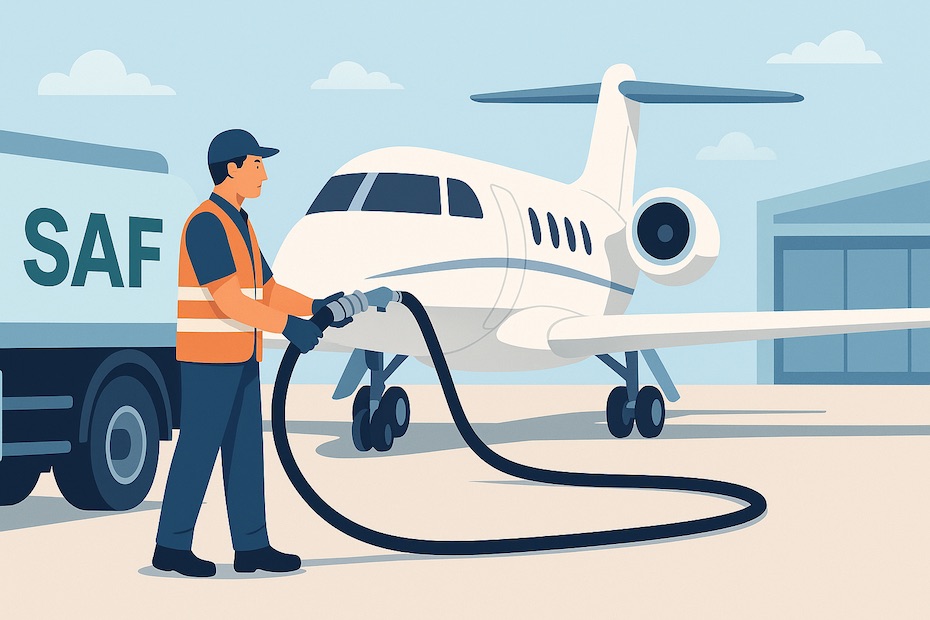
You reduce your environmental footprint without sacrificing comfort when you choose private jets powered by sustainable aviation fuel (SAF).
This article outlines how SAF is reshaping private aviation—from emission reductions and operator adoption to supply constraints and client-driven green upgrades. You’ll gain clarity on who’s leading, how to participate, and what to expect as the market scales.
How much can SAF reduce private jet emissions?
You can cut lifecycle carbon emissions by up to 80% using SAF instead of traditional Jet-A fuel.
SAF is produced from renewable feedstocks including used cooking oil, municipal solid waste, and plant residues. Unlike carbon offsets, SAF directly lowers tailpipe and lifecycle CO₂ emissions, offering measurable environmental gains with every gallon used. While the reduction varies by source and process, the 80% benchmark comes from industry leaders like IATA, ICAO, and Neste.
When flying privately, your fuel consumption per passenger-mile is higher than on commercial aircraft. That makes SAF a key lever in reducing your environmental impact while retaining personalized travel benefits.
Which private jet operators are already using SAF?
You can access SAF through select global operators that prioritize green aviation strategies.
NetJets leads the market by volume. In 2024 alone, it purchased over 19 million gallons of SAF, doubling its prior year’s intake. SAF flights are currently available through its partnership with Neste at multiple FBOs across North America and Europe.
VistaJet uses SAF on select routes and has committed to making every flight carbon neutral by 2025. Its usage of waste-oil-derived SAF underlines its shift toward measurable sustainability in long-range missions.
Jet Aviation, through its Amsterdam FBO, enables SAF fueling via SkyNRG’s logistics. Jetex, with support from Shell, offers a Book & Claim model that decouples SAF delivery from actual flight location—allowing you to claim the carbon benefit regardless of your departure base.
Wheels Up, in partnership with Delta, brings SAF to a broader member base with optional carbon-neutral booking add-ons. This flexibility enables smaller fleet operators and owners to participate in SAF-powered aviation without waiting for global access.
What are the challenges in scaling SAF?
You encounter three key limitations: high cost, low supply, and insufficient infrastructure.
SAF currently represents less than 1% of global aviation fuel usage. The production gap is significant. According to the U.S. Department of Energy, reaching just 3 billion gallons of SAF by 2030 requires a 190-fold scale-up from 2022 levels. That kind of growth demands feedstock diversification, investment in refinery upgrades, and global government support.
You also face price premiums. SAF typically costs 2–4 times more than conventional Jet-A, depending on blend, origin, and location. Until policy mechanisms or larger buyer pools reduce that delta, SAF will remain a premium fuel—aligned with the luxury and accountability profile of private jet clients.
The third issue is FBO availability. SAF isn’t yet available at most private terminals, particularly in emerging charter markets or smaller domestic airports. This limits your routing flexibility if you want consistent SAF options on all trips.
How do you opt into sustainable aviation fuel for a private flight?
You enable SAF usage by booking through operators that offer opt-in programs or default SAF options.
During flight planning, many operators give you a choice to select SAF—often with a clear line-item cost and projected emission savings. This transparency lets you compare total impact and cost before confirming.
Victor reports that over 500 clients have added £1,000 or more to their bookings to enable SAF use. This model aligns with the buying behaviors of values-driven flyers—those willing to invest in solutions they can verify.
JetLevel, VistaJet, and Jetex also provide SAF allocations or Book & Claim options. The benefit is credited to your flight or account, even if the SAF is loaded elsewhere. This ensures your sustainability action is real, traceable, and recognized—without waiting for global SAF distribution.
Are there credible alternatives while SAF scales up?
You still reduce environmental impact even when SAF is unavailable or cost-prohibitive.
Partial SAF blends are already delivering value. ACI Jet in San Luis Obispo offers a 30% SAF mix on select flights. A single 8,000-gallon batch delivered to its FBO offsets over 19 metric tons of CO₂—equivalent to removing nearly five vehicles from the road for a year.
Carbon offset programs fill the gap further. Operators like Haute Jets apply carbon offset fees based on route, fuel burn, and aircraft class. While not a replacement for SAF, this provides interim accountability until broader SAF availability matures.
Hybrid models—where you combine carbon offsets, SAF bookings, and more efficient routing—allow you to build a green flight strategy today without waiting for full infrastructure rollout.
What policies and partnerships support future adoption?
You benefit from long-term regulatory momentum and public-private SAF alliances.
Governments in the U.S. and EU have introduced tax credits and blending mandates to support SAF development. The U.S. Inflation Reduction Act allocates incentives for domestic SAF production, and the EU Fit for 55 plan requires rising SAF usage at European airports by 2030.
Private sector partnerships like Shell + Jetex, NetJets + Neste, and Delta + Wheels Up accelerate SAF delivery and standardize tracking systems for emissions reduction. These collaborations enable clients like you to fly cleaner, smarter, and more transparently.
As mandates increase, SAF is expected to hit price parity with Jet-A sooner, particularly in charter-heavy corridors like New York–Miami, London–Nice, and Dubai–Malé.
Key Benefits of Sustainable Aviation Fuel in Private Jet Travel
- Cuts lifecycle CO₂ emissions by up to 80%
- Compatible with existing jet engines and infrastructure
- Available from NetJets, VistaJet, Wheels Up, Jet Aviation, Jetex
- Book & Claim options extend SAF access across global routes
- Enhances ESG credibility for private flyers and operators
In Conclusion
You elevate private aviation when sustainability and sophistication align. Sustainable aviation fuel delivers proven emissions cuts, and leading charter brands already enable access. While pricing and supply remain obstacles, credible programs like Book & Claim, partial blends, and carbon offsets keep your impact visible and measurable. By making informed booking decisions today, you help accelerate SAF scale and define what green luxury truly means.
For more updates and initiatives I support, visit the Facebook page.

Robert Wilkos is the co-founder of VIPJets.com and a private aviation executive leading luxury charter services through a global network of 10,000+ aircraft. He champions rigorous Wyvern/ARGUS safety standards, 24/7 concierge support, and flexible options like the 25-Hour Jet Card, along with ground and air-medical transport.